

Metalcatto
We’ve done many interviews at MER now—some nerdy, some about war, some about mental struggles—but today, I bring you something different. Asenath Blake is here to talk to us about her work, and more importantly, about its philosophy. That’s not new in metal; so many black metal musicians are inspired by old books. But how about one that gets us out of our comfort zone?
Style warning! If you’re not familiar with the continental philosophy school of writing, this article will be like being high on mushrooms in a theme park. But first, what kind of philosophy are we even talking about?
Asenath: In fact, the title of this album is taken from an article by Georges Bataille entitled “Le Bas Matérialisme et la Gnose”, which could be translated as “Low Materialism and Gnosis”. Published in 1930… the French philosopher draws a surprising parallel between gnosticism and materialism, both of which oppose idealism, albeit in very different ways. As this essay was written before the discovery of the Nag Hammadi library, Bataille bases his argument mainly on the negative interpretation of Gnosticism by its detractors, who depicted its rites as monstrous, sinister, and obscene. According to the philosopher, black magic has continued this tradition to the present day. As my music is deeply connected to my practice of witchcraft, I wanted to personally update this link, even if it’s partly imagined. What interests me is the idea of not submitting to anything high. With its raw, dirty, and imperfect aesthetic, I think Black Metal is the most suitable form for expressing these things.
Now you see what I was talking about. Asenath is trying to link ideas you don’t think about every day, I assume. Is this what theoretical witchcraft looks like?
Asenath: On the contrary, the concept of Low Materialism aims to rehabilitate matter as an active principle that is dark not because of an absence of light, but by its very nature… Despite all the theoretical clutter that witchcraft likes to surround itself with, materiality is undoubtedly at the heart of this practice. It’s a bit like the internet: we think it’s all ethereal, but it took sweat and blood to extract the rare-earth elements that are currently allowing you to read these lines or listen to my music. So I delved into the more organic aspects of magic to compose this album that blends digital, electric, and acoustic sounds.
In my peasant attempt to follow, I realize this is something I could get behind. Practices in the material world (as in a world made out of matter) have become hard to deny as fact. Hence, witchcraft-themed work is, to most of us, a work of fiction. So what I understood from this statement was: is there a way to keep the thing alive in a world devoid of magic?
Asenath: I prefer fairy tales to myths because grand narratives always tend towards normalization… Contrary to a well-known label in the scene, I believe I’m offering a kind of heterodox black metal. For me, Power, Evil, or even Nature are still ideals, constructs that prevent us from seeing the night as it truly is. So, I listen to the countless, subjective, and fluctuating stories of women sitting around the fire, because their stories are more valuable to me than any metanarrative. It’s the Distaff Gospel, to borrow the title of one of my songs.
You people know what my next question would be after reading this: what is the night truly like? Sure, those are human attributions based on our own connotations, but it still assumes some sort of essence. I’m confused, people—why does this even matter? That’s probably the best philosophical question I’ve got for you, but it seems Asenath has already been there.
Asenath: There is no such thing as hidden knowledge, only people who are too lazy or not interested enough to seek it out. Having gone through a nihilistic phase myself, I understand the state of negativity, or rather depression, that can lead to it. Now, my concept of emptiness is closer to that found in Taoism: “clay is fashioned into vessels; but it is on their empty hollowness, that their use depends.” Low Materialism is an anti-idealistic album. In this respect, it goes against transcendental black metal and advocates animal immanence instead.
In that I agreed. As a trained scientist and Russian literature fan, I don’t believe in mysteries; the idea that there’s something secret is hope for the dying. But of course, you end up in a hole once those thoughts set in. Unless you take the Alyosha route, but I don’t want to make this more snobbish than it already is. I also wanted to ask more grounded questions.
Asenath: …Music is a ritual that we are not conscious of. When I get down to it, I try to keep this in mind so that these moments of creation may depart from the secular sphere. The use of symbols, which is very common in religion, politics, and business, makes me wary, and I try not to overuse them. What interests me above all else is praxis. Experimenting means trying things out, doing them again, undoing them. In magic as in music, it’s almost impossible to achieve the same result twice. Each take is unique. I think the most ritualistic part of my music is the singing. I have developed a kind of technique that allows me to enter a trance-like state, without which I would not be able to achieve the right intensity.
Well, at least now we know why Low Materialism’s singing is so idiosyncratic. I personally struggled with it because it’s like nothing I had heard before; it defied my preconceptions. But as music nerds, that’s what we’re here for—to be surprised! However, I did want to know more about the harrowing atmosphere on the album; there’s constant questioning of what reality means here.
Asenath: I am surprised that such intimate considerations are so apparent in my music, but you’re absolutely right! For me, reality is like a curtain that we try to see as a wall so we can feel safe. But sometimes, weird drafts make it flutter and show the trickery. Then, for a second, we can see something behind it: a space, a jewel, a monster. A significant part of my artistic research aims to intentionally reproduce such movements, even if this is not without risk. In this sense, my music is not so far removed from magical realism or supernatural fiction. Background textures play a big part in this process. I add analogue white noise and stretched flute and hammered dulcimer parts. It’s barely audible, but it’s there, giving the whole thing an unstable foundation.
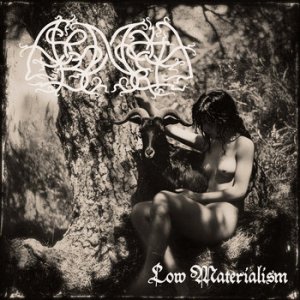
Oh, don’t worry, Asenath—I noticed those noises drilling into my ears. It was like the Earth roaring (I’ve been through an earthquake or two, just saying). The idea that reality is something absolutely horrible and unbearable and that our minds constantly lie to ourselves to cope is familiar to you, my fellow Metalhead, right? I thankfully skipped the lectures on Lacan in school, but it seems not everybody did. However, I wanted to dig more into this “realism.”
Asenath: By releasing my albums under my own name, I assert a certain identity that I know to be fragile and unstable. The question of the Self, a key concept in Austin Osman Spare’s magical approach, but also in that of the Portuguese poet Fernando Pessoa who multiplied his heteronyms in order to express himself, has always fascinated me. The fact that the word ‘person’ derives from ‘persona’, a Latin term referring to a character in a play, speaks volumes. We all play roles: that of the exemplary mother, the cheeky student, or the self-made woman. The problem is not there, but in the fact that behind the mask, there may be nothing.
As a fan of the Book of Disquiet, this was a fun analogy to read. Black Metal, despite its attempt to be raw and unclean, is deeply performative—let’s face it. We constantly joke about it. We all have our Metal persona; hell, I literally created a blog to have a cat alter-ego. Maybe Metal helps some of us get in touch with that. Yet a lot of what we’ve talked about so far is paradoxical.
Asenath: Decades have now passed between true Black Metal and post-truth Black Metal. An artistic genre declines when it no longer has anything to offer. Even in so-called extreme music, a certain classicism prevails. My goal is not to meet a set of specifications but to see where the limits lie in order to try to push them. I still do not know if this is truly possible because our own movements change the boundaries. I have done my part. Now that the work no longer belongs to me, it’s up to the public to do something with it through speculation, interpretation, confabulation, or simply by listening to it.
That was an intense journey! Now I’m going to throw away the ladder Asenath gave me to climb up (if you get that reference, you need to leave home more often). Follow her!
 Metal Eclipse Reviews