
Pegah
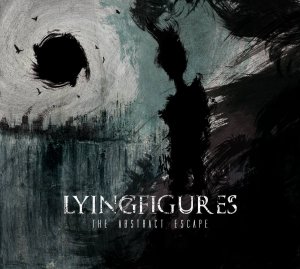
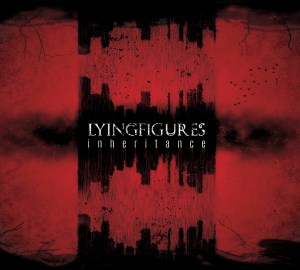
Hey guys! We’re back with another interview, this time with French Doom/Death Metal band Lying Figures. Formed in 2012 in Nancy, the band began shaping their identity through the 2013 demo From Nowhere to Nothing and the EP A World Of My Own (2014). Over the years, Lying Figures steadily developed its voice within the underground Metal scene, leading to the release of its debut album The Abstract Escape in 2017 — an evocative journey through fractured psyches, dark emotions, and oppressive atmospheres. Its latest album, Inheritance, released in November 2024, marks a new chapter in the band’s evolution. A full review of the album is also available on our website.
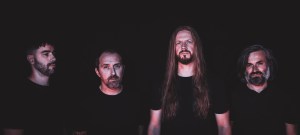
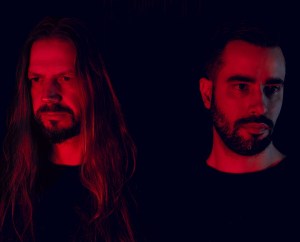
This interview features Frédéric Simon and Matthieu Burgaud, the two long-standing pillars of the band — Fred (member since 2014) and Matt (member since 2012) — who have carried Lying Figures through its most defining years.
The good news doesn’t stop there: In September 2025, Lying Figures expanded its lineup and announced the addition of two new members: Christophe Cosson on guitar and Guillaume Noel on drums. The band will also be performing at the Battle in the Nord Festival, held on January 24 and 25, sharing the stage with legendary acts such as Officium Triste, Invernoir, and Marche Funèbre. Later on, Lying Figures will appear at Haunting the Castle VI on February 27 and 28 in Belgium, alongside Mournful Congregation and several other outstanding bands.
This interview was conducted before the new members officially joined the band.
Hello, and thank you so much for taking the time to answer our questions. Let’s start at the very beginning—your first steps into the world of Metal. Can you share how your passion for Metal music developed and what led you to pursue it more seriously? Which bands or artists inspired you along the way?
Matthieu: I discovered Metal when I was quite young, around 12 or 13. Then it was simply curiosity. You dig around, you go to the media library, you pick up records at random, then you meet other people who show you other bands, etc. In the end, you realize that you’re listening to music all the time. What led me to make music was doing a project with friends at a time when things weren’t very nice for us. We had just left high school, where everything was pretty cool, and we found ourselves thrown into studies or jobs that weren’t very enjoyable. We were pretty depressed at the time and wanted to start a band together to play depressing music. The first compositions and recordings weren’t great at the time, but we were mainly doing it to express ourselves. Then, with practice, the compositions took on more meaning, and it became more serious. At the very beginning, I won’t lie, the bands that inspired me the most were My Dying Bride and Katatonia. I listened to them on repeat. All the discography available at the time ( Katatonia had just released The Great Cold Distance, which is still one of my favorite albums). Then I broadened my horizons a little, but it was still mostly gloomy music. Lots of Doom/Death ( Inborn Suffering, Rapture, Daylight Dies, Ataraxie …) and Black or Post-Black Metal. Today, I’ve moved away from those styles a bit to focus on more avant-garde genres or hybrid styles. It’s always nice to listen to some old My Dying Bride or Anathema from time to time, but that’s not what I listen to most of the time anymore.
Fred: I’ve always been drawn to Rock music and Heavy sounds. I first got interested in music with Michael Jackson, and when I heard Van Halen ‘s solo on “Beat It” for the first time, I was fascinated by what you could do with a guitar! Gradually, my taste in music got heavier, moving on to Nirvana, Pearl Jam, Metallica, Kiss, etc. Until I discovered extreme Metal around 1996, with Morbid Angel, Death, Paradise Lost, My Dying Bride, Anathema, Loudblast, Obituary … I started learning to play guitar in 1994, when Kurt Cobain ( Nirvana ) died. That was really the trigger. When I felt I had reached a decent level, I started trying to join a band. I couldn’t see myself continuing to play alone in my room; it was important for me to interact with other musicians, share ideas for riffs, etc. Even if we don’t make music professionally, we do what we need to do in our artistic approach to get closer to it, but we have other jobs on the side. It’s very difficult to make a living solely from music, especially in extreme Metal, and even more so in Doom/Death Metal in France!
2. How did Lying Figures come together? (Matthieu, could you explain this part?) And Frédéric, how did you later join the band?
Matthieu: As I was saying earlier, I formed Lying Figures to do a project with friends. But the problem we had was finding five people who could commit long-term. No matter how close we were, we needed people who were available. And we couldn’t get any gigs, we did very few… When we parted ways with Ludo on bass for availability reasons, I had the idea of recruiting someone who would be both a good musician and someone who could boost the band’s “career” at that point. That’s why I thought of Frederic. Plus, he came from one of my favorite bands at the time. He accepted and has been with us ever since.
Fred: When I moved to eastern France, I immediately started looking into the local scene, which is how I discovered Lying Figures. I contacted Matthieu to tell him how much I liked his band. The guys asked me to make a guest appearance on the track “Words Here Are Nothing” from their demo “From Nowhere to Nothing.” From there, when Ludo left the band, things just fell into place naturally.
3. Fans have noticed a significant change between the first and second albums. The band initially had five members, but now only Matthieu and Frédéric remain. Can you tell us why the other members left?
Matthieu: Things were going really well for Lying Figures. We were playing more concerts, writing songs, and there was a real dynamic. We were able to write an EP and our first studio album (The Abstract Escape) fairly quickly with the lineup we’d had for several years. It was after that that things got complicated for us. The first to leave was Mehdi, a founding member with me, for artistic and personal reasons. He was already less interested in the style of music we were playing. We were able to continue playing concerts with other guitarists (Hugo and Claude) for a few years while composing the follow-up to that album. Then Thibault started to give us less and less news, we couldn’t get any vocals on the compositions, and he finally decided to leave the band too. It was a huge blow for us at the time. We had to rethink everything. That’s when Lying Figures became a four-piece band with Frederic taking on the role of bassist and singer.
Fred: After Thibault left, the four of us continued with Matt and Claude on guitars, Charles on drums, and myself on vocals and bass. Then Claude moved quite far away, so we called on Hugo, who had already replaced Mehdi a few years earlier. Things were going well, but at the beginning of 2022, Charles decided to focus on his role as guitarist in his other Thrash band, while Hugo was finding it difficult to balance family life and life in the band. With “Inheritance” almost finished, we decided to continue as a duo and record it. We called on Deha to produce it, which was the best option given our recent situation.
4. How did the idea of Inheritance come about? Is there any specific album that inspired you for this release? Any philosophical thought? Or maybe another source?
Matthieu: In the meantime, I became a father. And I chose to base the album’s theme around the idea of passing things on. You could say that my son inspired me, despite himself. Obviously, I chose to frame it in the worst possible terms, but he was the main source of inspiration. No specific album comes to mind when I think about the compositions. People often tell us that we remind them of this or that band, but I don’t listen to much music. We’re always influenced by something, but it’s hard to say what that is for this album.
Fred: We weren’t really influenced by any artists or albums, at least not intentionally. We just went with the flow. It’s a Lying Figures album, no more, no less. You can hear Matthieu’s influence. Our sound has evolved along with us. We took a lot of time and thought into the riffs, the arrangements, the lyrics, and even the artwork. We really wanted to take a step forward with this album without breaking with our past. That’s the very principle of “inheritance”.
5. You’ve mentioned that Inheritance is more introspective than your previous album. Can you elaborate on what led to this shift in direction, the central themes of Inheritance, and how did you explore them in your music?
Matthieu: Much more introspective, even. In The Abstract Escape, we tried to get inside the head of someone in the throes of madness, and even though we all are a little bit mad, no one in the band was that crazy, so we kind of told a story, let’s say. In Inheritance, I put my fears and questions into the lyrics; the fear of passing on bad things (illness, anxiety, fears…), the fact of being completely forgotten as soon as you disappear, the fact of doing nothing important in your life and leaving nothing behind. That’s what the whole album is about, being a bad person and passing that on to someone else. Transmission. Will being a bad person have repercussions on those who come after us, both our children and entire generations? Should we be proud to pass on what we know, even if what we know is bad? Maybe we don’t even know if we’re a good or bad person. I question what we’ve learned; too few people question themselves in life. They pass on harmful values and ideas without realizing it. They put pressure on future generations when they haven’t done anything good themselves and never question themselves. In the first track on the album, I talk about someone who is addicted to negativity, which is a real illness. Imagine passing that on to your children, a life without a trace of joy, just because that’s the only way you see things. I also talk about people who don’t want children because I was one of those people, and I confront the different points of view. Who is right? Who is wrong? Who will regret it? I exaggerate all this to highlight the traits because we’re making art, of course, but in this album I wanted to question myself and question everyone else a little bit.
6. Who wrote the lyrics, and what were the main inspirations behind them?
Matthieu: I wrote the lyrics for all the songs on the album, except for “Contemptus Mundi”, which is Thibault’s last track on the album. It was a song he wrote and composed that we wanted to keep.
7. How much of your inner darkness is reflected in your music?
Matthieu: All of it, I try to give it my all every time. It’s sometimes harder for some songs than others, but I always give it my all.
Fred: Music is an outlet. When we compose, it’s an opportunity to pour all our darkness, our doubts, our melancholy, our anger into it… It’s liberating to be able to “get it off our chest” through our music.
8. What message do you aim to convey to your fans and audience through your music?
Matthieu: When you play Doom or Doom/Death Metal, the goal is to convey that nothing is quite right. I think that’s what we do. It’s still dark music, and when you listen to it, that’s what you’re looking for.
Fred: If fans can identify with a particular lyric or song, it’s gratifying to know that it touches people in one way or another.
9. It seems that many Doom Metal bands have either gone on hiatus or disbanded. Do you think this is specific to the genre, or is it just a coincidence? What factors do you believe contribute to this?
Fred: It’s difficult to answer that… every band is different. In our case, although seven years passed between “The Abstract Escape” and “Inheritance,” it was never intentional. We continued to be active on stage, but we had our share of problems that slowed down the process, whether it was lineup changes, injuries, changes in our personal and/or professional lives… and of course, Covid. I can’t speak for other bands, but I think some of them felt nostalgic for their own past, like Obituary , who reformed in 2004 and are still touring today. Sometimes there are internal tensions that cause a band to split up, but then the years go by, tempers cool, and the desire to make music again becomes stronger… Once again, every band has its own story…
10. As an artist active in the Metal scene, what challenges or obstacles do you face? Are there any issues in the industry that you hope will be resolved?
Fred: Of course, I’m thinking about the live aspect here. Whether it’s for us or for many other bands, it’s becoming difficult to play live as much as we did 20 years ago. Concert venues are closing, promoters aren’t paying bands as well as they used to, and sometimes the audience isn’t turning up in sufficient numbers despite the quality of the line-up. And of course, the record industry has completely changed with the expansion of streaming platforms. To survive, a band has to sell merch, play concerts to finance future albums, etc. We mustn’t forget that it’s the audience that keeps a band alive by supporting it, and buying CDs, vinyls, merch, and going to concerts contributes to this. Technology has changed, and it’s becoming easier and easier to create music in a home studio, which is great! But on the other hand, we’re inundated with new releases every day, and it can be difficult for a band to stand out amid all that.
11. As far as I know, you’re currently searching for new members to perform live. Have there been any updates or progress on this?
Fred: Doom/Death Metal isn’t a very popular style in our region, so it’s difficult to find musicians who are interested in the style and have the right level of skill and attitude. At first, we really wanted to focus on the album; that was our priority. But now that it’s out, we’ve been able to consider getting back on stage. Since January, we’ve been working behind the scenes with a new lineup. We’ve found a guitarist and a drummer from our region, things are progressing well, and we even have our first date scheduled for January 2026 at Battle in the Nord (France).
12. What are your thoughts on the future of Death-Doom Metal? Where do you see the genre heading in the coming years?
Fred: Doom/Death Metal has been around since the early 90s. We’re seeing quite a few emerging bands like us and others who are becoming more and more established ( Evadne, Helevor, Invernoir, Marche Funebre, etc.), all of which show that Doom/Death has a bright future ahead of it. Some are very innovative and original, others are more old-school. It’s a bit of a shame that the audience isn’t big enough for my liking, given the richness of this style…
13. Thank you again, Frédéric and Matthieu, for taking the time to answer these questions. Before we wrap up, is there anything else you’d like to share with your fans or add to this interview?
Fred: We are very grateful to our fans who have been following us since the beginning. Lying Figures has been around for over 10 years now, and our style has changed and evolved. The positive reception we’ve received for “Inheritance” encourages us to keep going. It was a real challenge for us to finish this album, so a big thank you to the fans for their support and to you for this really cool interview!
Follow the band here and check out our review of Inheritance here!
 Metal Eclipse Reviews