
Ixone
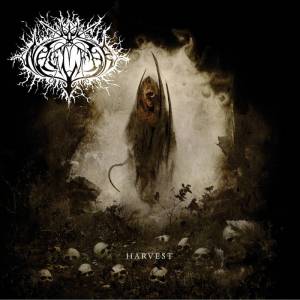
Very few albums have impacted me as deeply as Naglfar’s Harvest, and a huge part of that is, of course, its lyrical content. Why is that? To start, it’s fitting to address the fact that, generally, in Black Metal, when someone wants to explore dark states of being, the result often ends up being an absolute trauma dump of a DSBM record. Yeah… there are better ways to do it. Luckily, Naglfar found a solution to that problem on this album. But how did they manage that? By doing quite literally what symbolist poets were doing in the late 19th century: assigning external elements to inner states. However, in Harvest, this is done with far less subtlety and far more visceral intensity—which, being Black Metal, is exactly what one might expect.
The album opens with a rhetorical question that sets the tone for everything to follow:
I’m dying from within / Is this the end of the road that I’ve travelled in sin?”
Even this early, the main motif—or rather, the central symbol—of the album is laid out: the road. Representing life, or more specifically the end of it as the song suggests, it reappears in almost every other track on the album:
“Then their voices came near, now inside my mind they’re always there / Telling me what to say and do / Guiding my path, carrying me through / … / My work is done, I will walk away…” (The Mirrors of My Soul);
“I walk alone / the darkest road” (The Darkest Road).
However, the song that takes this idea to the next level is Way of the Rope. Leaving aside the rather on-the-nose title, we’re presented with a much more nuanced—and without a doubt, hard-hitting—set of lyrics. They walk a fine line between manic intensity and crushing despair. Some may argue they’re overly theatrical or excessive, but as someone who has struggled with these thoughts, they resonated deeply with my own experience:
Dark is the path that I wander / I curse your prophets, these proclaimers of hope / My mind is set, I am finally free / I shun this mortal coil and choose the way of the rope.”
This song also offers a glimpse of the end of this metaphorical road:
For a cold dark place where life is not / And a shallow grave where I shall rot.”
Part of what makes Way of the Rope so powerful—at least for me—is its raw, uncensored anger and misanthropy. This brings us to another essential element of the album’s lyrical content: destruction in all forms. It’s no surprise that destruction here serves as a metaphor for the album’s generalized misanthropy. This destruction presents itself in two primary forms: annihilation of the self (Way of the Rope, Into the Black), and obliteration of the world/humanity, best exemplified by the track Plutonium Reveries—a literal depiction of someone daydreaming about the end of the world:
Missiles shall fly / Upon the black wings of destiny / Brought forth by artillery / Erasing mankind”;
“Devouring flames I beseech thee / Ensure life to return no more / Plutonium reveries – And prayers of war.”
And in case there was any doubt about the album’s stance on humanity, Odium Generis Humani makes it crystal clear:
Misanthropy so deep in me / I hate every single one of you, can’t you see?”
“My wish for thee: death and disease / And not even then shall you be free.”
For those who may find this level of unfiltered rage unsettling, the final track offers a more poetic summary:
This Harvest is heavy and bitter it seems / In tainted soil it has grown / These words are its venom in its purest form / So choke on them now, yes, harvest the storm.” (Harvest)
This brings us to the third and final thematic element of the album: the devil. Out of all the symbols discussed, the devil is perhaps the most poetically rendered—despite what the song title Feeding Moloch might suggest. He is portrayed not just as a religious figure but as a vessel for rebellion against life, the world, and everything else. In this sense, he ties together all the lyrical elements just as cohesively as the symbol of the road.
He is the one invoked to bring about the end of all things:
Lift me up, exalt me, release me from pain / Remove damnation’s stain / That torments me and marks me as Cain.” (Breathe Through Me);
“Oh glorious father I call upon / Your blinding winds / Engulf this world with your nuclear fire.” (Plutonium Reveries);
“I heed to your call (I’m burning them all) / Feeding Moloch.” (Feeding Moloch)
Interestingly, at times, the lyrical voice seems to become the devil himself—or at least take on his persona. Whether they are one and the same is up for interpretation, and I highly encourage you to form your own conclusions.
All that said, through the masterful vocal work of Kristoffer Olivius—who brings to life this absolute manifesto of damnation—we are given what I consider one of the most honest depictions of emotional struggle against oneself and the world. The blend of simple and complex language in the lyrics, along with the use of the three core symbols—the road, destruction, and the devil—provides a truly cathartic listening experience.


1 comment