

Metalcatto
This interview has taken forever to complete. Mostly because of me being busy running this tiny Metal empire, but it was worth it to return to our humble origins—before wealth and fame corrupted us. Die Entweihung has the honor of being the first band we covered in True Kvlt. The raw MeloDeath project, led by Denis Tereschenko from Belarus, who also happens to live in Israel right now and is heavily political, made me have so many questions. And yes! I know this is a brutally heated and controversial subject. I’ll do my best to not misrepresent anyone and… who am I kidding? You’ll kill each other on IG anyway. Let’s go!
First of all, I had to ask Denis how he ended up in Israel in the first place. As a Belarusian whose music touches politics often, I was interested in his perspective as an “outsider.”
Denis: Absolutely, in every way. In fact, I sometimes think that by leaving Belarus, I began to live an alternative version of my life and that many things would not have happened had I stayed in my homeland. Specifically regarding my music—while in Belarus, I would hardly have been able to release my songs with the lyrics and design that I am currently producing. If we talk about the musical aspect directly—I would hardly have used Middle Eastern elements if I didn’t live in Israel. However, knowing my love for various folk styles, I would likely incorporate folk, but a different kind—probably Slavic/Belarusian, since the influence of Belarusian folk Metal bands has always been and remains strong for me. In general, with the life experiences I carry from Belarus and Israel, I can express myself more broadly, embedding not only myself as an Israeli in my music but also still as a Belarusian. Interestingly, some think that I left Belarus due to all those political troubles, dictatorship, etc., but I left due to health issues, and my personal story has no relation to the subsequent events in Belarus.
Yet, I wanted to know more about the current context for the project. Most people agree that freedom in Belarus is… limited, but there are a lot of heated debates about these same concepts in Israel, and I wondered if this had any repercussions on how he writes Metal.
Denis: To some extent, life in Israel inspires me to write lyrics, but it’s not the main source of inspiration. My lyrical concept in the last albums involves the description and contemplation of modern life as a whole, so everything happening around—wars in various regions, human greed, capitalism, the influence of religion, dependency on modern technology, etc.—everything that showcases the dark and ugly essence of humanity easily finds its place in my songs. Speaking about working on music during military actions or similar events—most major events usually happen away from my experience, as conflicts generally occur in the southern part of the country. I lived here during the Second Lebanon War in 2006, and yes, it was not particularly comfortable, but at that time I wasn’t involved in creativity…
It’s interesting how insulated from conflict the project is, but at the same time, it’s not surprising—I hardly see how anyone with authority would spend their time chasing down Metal bands during a “state of emergency.” Given that Denis’ motivation seemed ambiguous to me, I asked for more details:
Denis: It’s my personal form of protest, therapy, and a way of expressing myself through which I convey my thoughts and my vision of the world to listeners. Overall, one’s own music is great because through it, you can express what you often can’t or don’t want to articulate in ordinary life. For example, I would hardly participate in verbal battles on social media or fight someone who disagrees with my opinion, whether regarding the war in Ukraine, Israel, or the unreasonable development of the world in general. But I am more than happy to express what I feel, what I consider right or wrong through my music and lyrics. My creativity is my personal protest… or agreement, though that is rare, haha. Music and creativity have always been therapy for me, a kind of refuge—you can always turn to it in any life situation, it will never betray you, whether you are just a music lover or someone who creates music…
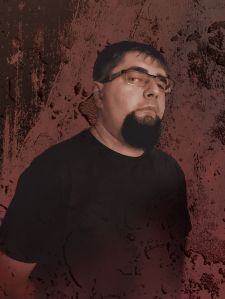
So, despite the personal touch of Denis’ work, there’s clearly a constant across all his albums: the struggle with authority and systems of control.
Denis: Politics and the wars associated with it are just one of the themes I write about. If I were to write only about the war in Israel or wars in the world—I would go crazy! Or at least quickly exhaust my poetic resources. But yes, of course, all my recent albums have songs about war in one way or another.
I know I sound persistent, but it was time to ask if there were any other effects of conflict on the Metal scene. Are people less open about touching certain subjects? Are people being chased for playing “Devil’s music”? Of course, this is an exaggeration, but it does happen in some places.
Denis: Since war is an integral part of Israel’s existence, I wouldn’t say that, for instance, the current war has radically impacted the Metal scene in the country. If you dig deeper into the history of the Israeli Metal underground, it’s easy to notice that even Salem, one of the earliest Israeli Metal bands, released songs about the Holocaust and wars in our times. The themes of the eternal enmity between Jews and Arabs are constantly raised in one form or another by the main treasure of the local scene—Orphaned Land. I would say that war is an eternal inspiration for local Metalheads. On the other hand, whenever a serious conflict starts in the country, it brings to light the same problems—usually the impossibility of bringing foreign artists for concerts, and local bands cannot always perform smoothly.
As Metal, as a sound, it’s also deeply depressing how war becomes the way a nation defines itself. Beyond practicalities, the main things keep running, but at the same time, I wondered about more subtle elements. Regardless of your political opinions, there’s increasing vigilance and even censorship on the internet. Someone like Denis could’ve faced problems with this, right?
Denis: If something like this happens, it’s usually only related to where I live. People absolutely don’t care that my early background has nothing to do with Israel, that I lived a big part of my life in a completely different and non-religious country, that I speak and think in Russian. People see that my project is from Israel, and that means there’s a chance to see a refreshing, like morning sour coffee, comment along the lines of “No place for Jews in Black Metal! …we don’t want to work with musicians from Israel” or “Nothing personal, we just oppose your government’s actions.” I play a style where many believe Jews shouldn’t be at all, and I still continue to do what I do, mentally sending everyone to hell.
Speaking of ways to offer resistance and subversion, many of you feel part of a big Metal community, or even a broader resistance, and for a moment I thought that maybe Denis was that person too. But I ended up getting a more Black Metal answer:
Denis: At this point, I don’t associate myself with any movement, neither global nor local—I just express myself on different topics and convey my thoughts, wrapping them in the packaging of blackened heavy/thrash with pieces of prog and folk.
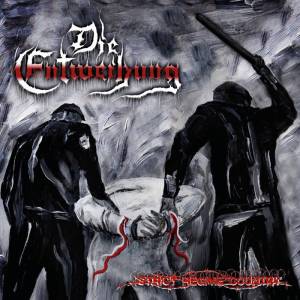
Alright, so not as melodramatic and aggressive as I expected, but more a way to let the anger and the pain go. How one person can be that lonely, shouting in the vastness of the cosmos to screw itself. However, I wanted to keep pushing the communitarian line of thought, so I asked Denis if he collaborated with anyone who shared his artistic vision:
Denis: I have never collaborated with anyone of Arab descent, but it’s not because I hate Arabs or for any other reason—it just happened that way. I’m not acquainted with any Arab musicians at all. As for international musicians—of course, I do have them. Alena from the Czech band Nocturnal Pestilence is among the first. She is a very important part of Die Entweihung. Also, in the context of the previous album “Strict Regime Country,” I collaborated very well with a guy from Turkey—Bilge aka Serpent. I am very pleased that despite all the political, economic, and other issues between Israel and Turkey, this does not reflect on the common creativity of people from both countries. I have no problem if a person does not share my opinions or values, as long as we can communicate normally…
It was comforting to hear something more kumbaya after so many tense subjects. I then asked Denis if there were lines, as an artist, he thought one shouldn’t cross:
Denis: All I can do is continue creating, making music, and hoping for the best, while understanding that the worst awaits us ahead. And be as decent a person as I can be… well, I will definitely never touch upon any national or racist themes in my creativity, nor themes regarding sexual minorities. If a person is an @sshole, I don’t care if he’s white, black, whatever, or whatever he loves—women, men, or Teenage Mutant Ninja Turtles. But singing that “you are an @sshole because you’re a black gay” is, in my opinion, not normal or worthy of an adequate person.
And with that less depressing note, I’ll leave you. Die Entweihung is looking for a new label, so reach out to them here. Follow the project here and here, and if you want merch, go here!
 Metal Eclipse Reviews