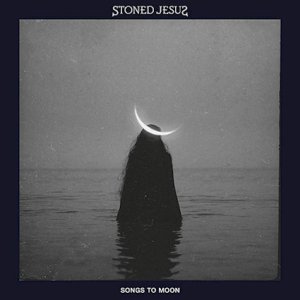
It always makes me happy when a band is back. As in, MER lived long enough to review it again. So I’m happy to live to see another Stoned Jesus album—not because I’m a diehard fan, but because the name amuses me every time I see it. My real question for Songs to Moon is: would it bring change, or is it going to be consistent? And if it’s the second one, would it be any fun?
Black Metal. I know, nobody is excited about it—especially when we have just five tracks here, like it’s going to hit us with three riffs for forty-five minutes, right? There’s no light at the end of the tunnel. Well, it’s true that there’s no hope. However, Windswept is trying to propose something more interesting than just a few half-baked ideas. A Sign of the Cloven Hoof should be as pagan as it sounds. Let me tell you something, then.
Well, kind of. Sure, it sounds like we’re getting introduced to some diabolical ritual and all that—you know, black magic and all the stuff that keeps us from believing in nothing. A Sign is a long and brutal journey, but an entertaining one. So those of you worried that this is going to sound like a factory, do not despair, because there are tons of ideas here that go beyond just mere blastbeats, goat screams, and white noise. It might not be the Icelandic school, but it does offer a lot of evil and darkness—and all the edgy things you came for.
There are only five tracks here, and though that should be terrifying for some, they’re all pretty well balanced. If anything, they could all blend into one horrifying and godless track. So your patience doesn’t need to be endless—you could actually chill while listening to this. Assuming you’re as disturbed as the rest of us to even contemplate heavy stuff as relaxing. Anyway, the bulk of the album’s momentum falls upon the guitar work, which has a solid and even memorable performance here. Okay, time to squeal.
A Sign is interesting indeed and doesn’t suffer from a lot of the issues albums like this usually have. But I do feel there could be more poignant possibilities here. As it is, it doesn’t stick in my head like, for example, something from Svartidaudi would, or even more Folk acts like Saor. Perhaps there are too many similarities between all the tracks. So even if it’s enjoyable, the album could have tried a few more disruptive concepts to stick harder in our memories.
Overall, this is a good performance. I know I’m making this sound like sports, but in a way, playing Metal has become so physical that the analogy makes sense, okay. Either way, for those of you who want creepy and endless Black Metal, Windswept has created something immoral for you. But if you like things more to the point or want real insanity, then keep holding your breath until you pass out. The album has its moments, but it won’t convert anyone who’s not already a fan of the style. For the faithful, though, it’s a solid addition to the collection—not a masterpiece, but a worthy listen for a dark night when you want to feel the cold wind of the north without leaving your room. And sometimes, that’s exactly what you need.
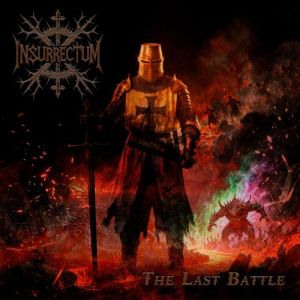
INSURRECTUM is a one-man project manned by the Ukrainian multi-instrumentalist Anatoliy Bliashuk, delivering an eclectic hodgepodge of progressive, symphonic, and Blackened Death Metal in its debut record, The Last Battle. Now I don’t want to be overly judgmental, but the abundance of AI-generated artwork–graciously excluding the official LP’s cover–doesn’t make for a suitable first impression. It’s a sign of laziness, a lack of creative drive. On the contrary, Anatoliy’s fifty-two-minute epic is brimming with ideas. In fact, The Last Battle is two different albums: there’s one in English (the edition provided for universal coverage), and another in Ukrainian. They’re musically distinct, with only the lyrical translations and core themes remaining mutual. This choice illustrates the tenacity behind INSURRECTUM’s ideas, but whether they’re as good as their covers is to be determined.
Many bands play war Metal, but very few truly understand it. 1914 certainly does, and Viribus Unitis proves once again that it’s more than just another band referencing history. The past two records could easily be considered modern classics, which made me approach this one with a mix of excitement and apprehension. How do you follow up something that already defined your sound so powerfully? And more importantly, how does a band that has built its identity around the horror and futility of war capture a tragedy of this scale without repeating itself? Those were the questions in my mind when I first pressed play.
Stoned Jesus is probably one of the best band names I’ve heard in a while. You immediately know this is a Stoner/Sludge Metal band, right? True, but that’s the thing about Songs to Sun — it promises to be so much more than another album to roll joints to. There’s a moment of maturity many bands in this niche eventually reach, and I’m wondering if this is that album in its catalogue. The one where it convinces not just the diehards, but everyone else too, that you can be psychedelic and heartbreaking at the same time. Enough waiting, let’s dive in!
You know what this year hasn’t had much of (aside from peace and love)? Sad puppy Death/Doom. So I decided to check the inbox and see if we had some. Of course we did: Sorrowful Land – Hiraeth (I swear I’ve reviewed an album with that name before). However, despite my obvious bias for this wholesome and crushing subgenre, I’m trying to give more balanced views lately when it comes to my guilty pleasures. So, let’s see if this album is something Pegah would love, or just me. Let’s dive in!
It’s time for a debut album, my Metal grasshoppers! When I was reading OBRIJ’s promo, I was led to believe that Joseph would totally throw me out of my comfort zone, since it was supposed to have a ton of Hardcore influences. Yet, it was still a Death Metal album, and that always hits home for me. Plus, this work explores the atrocities of Comrade Stalin. There’s no way that horror isn’t Metal enough for us, but as a new band, I still wondered if these guys were capable of pulling anything interesting off. Stay with this cat and find out.
The elitists will say that Jinjer is a mainstream band that takes a bit of Metalcore and Djent and tries to give it a Progressive twist. Personally, I don’t really care what the gatekeepers think. I’d argue that the band takes elements that have been massively successful and blends them with more underground influences, making them a great ambassador band for those ready to explore the harsher side of our community. That said, my expectations for Duél are realistic—I’ll have fun, but I don’t expect anything to completely blow me away. Let’s dive in and see what it’s all about! Worst-case scenario, we end up liking it, and that’s not so bad, right?
For every Black Metal listener with a preference for ferocity over coldness, this album might just be right up your alley. Judging by the album cover alone, it might not seem that way, but the second the second track (the first one is, of course, an intro) kicks in, you’re in for a wild ride. Having been in production for over four years before finally seeing the light of day, it’s easy to (rightfully) assume that this is a carefully written and well-executed record.
An album like this usually goes straight to the True Kvlt section. It came late, with no promo and little clout (plus the title is missing an accent mark in Él, that’s how pedantic we can be at MER). However, I was also puzzled by how strange all its elements were. We’re talking about a Tech Death mixed with Aztec Folk Metal band, from Ukraine, with lyrics in English and Spanish. It can’t get weirder than this. I had to listen to it to believe it. Could Cosmic Jaguar‘s El Era del Jaguar join our small group of year-end deep underground revelations?





 Metal Eclipse Reviews